Declining estrogen during perimenopause and menopause is associated with several changes in skin, including reduced collagen and elastin production, drier texture, and increased sensitivity. This is general physiological context, not personalized medical guidance; anyone managing menopause symptoms broadly is better served by a doctor than by a skincare routine alone.
La Prairie’s Pure Gold Revitalising Essence is a hydrating essence formulated with this context in mind, though it’s worth being precise about what a cosmetic essence can and can’t do: it may support the look of skin affected by these changes, but it does not address the underlying hormonal shift itself.
What’s Actually in the Formula
The named peptide in the ingredient list is Palmitoyl Tetrapeptide-10, a signal peptide from the same general family covered in our dedicated guide to this class of peptide, marketed here under the brand’s name “Gold & Peptide Powered Meno Complex.”
The formula also includes real, elemental gold, sourced through a partnership with the Swiss Better Gold Association, which supports small-scale, lower-impact gold mining, alongside time-released Glabridin, a licorice root-derived compound generally used for its brightening and soothing properties. Hydrolyzed opuntia flower extract and sodium hyaluronate are included for hydration, and La Prairie’s Exclusive Cellular Complex™, the brand’s ginseng and horsetail-based botanical blend, rounds out the formula.
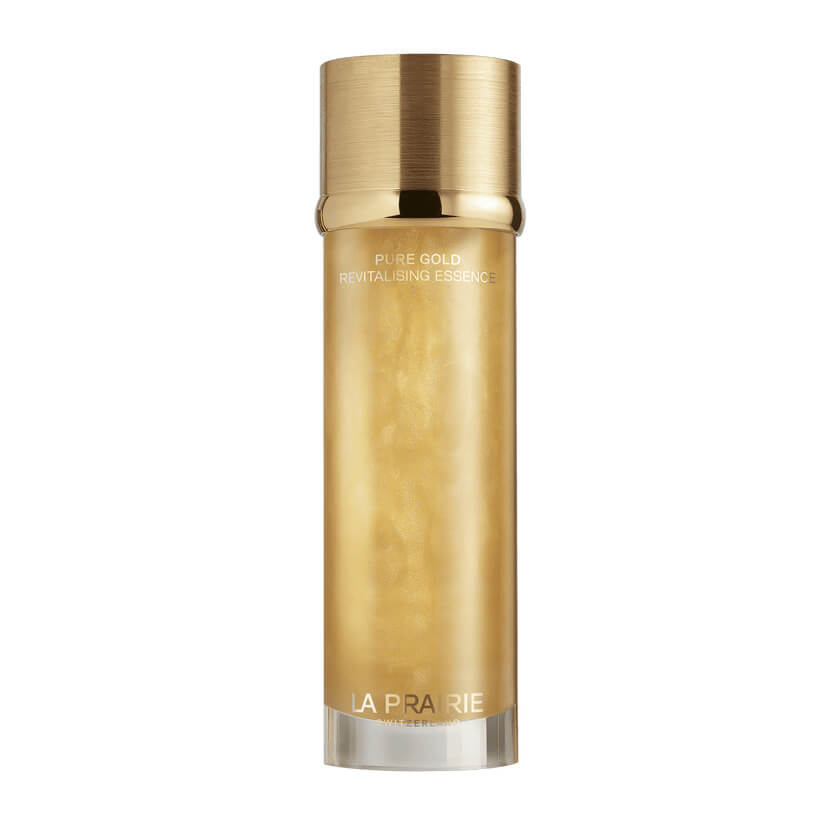
A La Prairie essence built around palmitoyl tetrapeptide-10, real elemental gold, and a licorice-derived brightening compound, intended to support hydration and appearance during hormonal skin changes.
What This Formula Is Intended to Support
With consistent use, the formula is intended to support hydration, a soothed feeling, and the look of firmer, more radiant-looking skin. As with any cosmetic peptide product, these are appearance-level claims. They don’t address the hormonal changes driving the underlying skin changes, and this product isn’t a substitute for medical guidance on menopause symptoms generally.
How to Use It
Shake before use. Apply morning and evening after cleansing and toning, smoothing over face and neck while avoiding the eye area, and pat gently until absorbed.
A Note on General Skin Care During Hormonal Changes
Broadly, dermatologic guidance during perimenopause and menopause tends to favor gentle, fragrance-conscious cleansers, consistent moisturizing, sun protection, and, for many people, a retinoid at night, covered in our guide to peptides vs. retinol. This is general information, not a recommendation tailored to your specific skin or health history; a dermatologist can give guidance that actually accounts for both.

Related Guides
Wellness Science
The Complete Peptide Glossary: Every Ingredient Explained
A single reference for every named peptide covered across our guides, organized by function, with a one-line summary and a link to the full breakdown for each.
Continue ReadingWellness Science
Collagen Peptides Explained: Do Oral Supplements Really Work?
Collagen peptide powders promise skin, hair, and joint support, but the path from a scoop of powder to any visible effect is longer than the marketing suggests. Here is what actually happens and what the evidence supports.
Continue ReadingIngredient Deep-Dive
Peptides in Skincare: What They Actually Do for Your Skin
Peptides are one of the most common actives in modern serums, but the label rarely explains what they actually do once they touch skin. Here is the real function, ingredient by ingredient category.
Continue ReadingIngredient Deep-Dive
Peptides vs. Niacinamide: Can You Use Them Together?
Peptides and niacinamide are one of the easiest active pairings to combine, without the irritation concerns of retinol or the formulation issues of vitamin C. Here is why, and what each ingredient actually contributes.
Continue ReadingIngredient Deep-Dive
Peptides vs. Retinol: Which Should You Use First?
Peptides and retinol both show up in anti-aging routines, but they are not interchangeable. Here is how the two actually differ, and a practical way to decide where to start.
Continue ReadingWellness Science
Peptides and Longevity: Separating Hype from Evidence
Longevity culture talks about peptides constantly, often blending well-supported skincare research with much bigger, far less settled claims about aging itself. Here is how to tell which is which.
Continue ReadingWellness Science
Why Are Peptides Suddenly Everywhere? Understanding the Trend
Peptides didn't become a household word by accident. Several separate trends converged at once, from biotech advances to a completely unrelated medical news cycle. Here is what's actually behind the surge.
Continue ReadingIngredient Deep-Dive
Palmitoyl Pentapeptide-4 Explained: The Original Signal Peptide
Palmitoyl pentapeptide-4 helped popularize the entire signal peptide category in skincare. Here is what makes it different from copper peptides and acetyl hexapeptide-8, and what the research actually shows.
Continue ReadingIngredient Deep-Dive
Peptides vs. Vitamin C: Which Should You Use First?
Peptides and vitamin C both get marketed for firmer, brighter skin, but they don't always play well together in the same formula. Here is what actually separates them and how to layer them without wasting either one.
Continue Reading