Walk down the skincare aisle of any store and “peptides” shows up on more labels than almost any other active ingredient category. What varies enormously is what those peptides actually do, and how clearly the label explains it. This guide covers the real, functional role peptides play in skincare, without the vague marketing language that usually surrounds the word.
Peptides Are a Category, Not a Single Ingredient
The first thing worth understanding, covered in more depth in How Peptides Work in the Body and Skin, is that “peptide” describes a size of molecule, not one specific function. A skincare product listing “peptides” could contain any of several distinct types, each doing a different job. Reading past the word itself, to the specific peptide named on the ingredient list, is the only reliable way to know what a product actually does.
The Main Jobs Peptides Do in a Formula
Supporting the look of firmness and fine lines. Signal peptides mimic fragments your skin produces naturally during repair, prompting cells to behave as though repair is already underway. Over time, this supports the skin’s own collagen production. This is the most commonly marketed peptide function, and the one most associated with anti-aging serums specifically.
Delivering trace minerals to skin cells. Carrier peptides transport a specific mineral, most often copper, to skin cells, supporting the processes those cells use for maintenance and repair. Copper peptide complexes show up often enough in this category to get their own full breakdown in Copper Peptides (GHK-Cu) Explained.
Softening the look of expression lines. A separate category reduces the muscle contractions behind expression lines with repeated use, instead of working through collagen support. This is a mechanically different job from the two above, even though all three get filed under the same “peptide” label on a box.
Reinforcing the skin barrier. Some peptides target skin’s moisture barrier specifically, working alongside humectants and ceramides rather than replacing them.
One example of a barrier-focused formula is HydroPeptide’s Face Lift moisturizer:
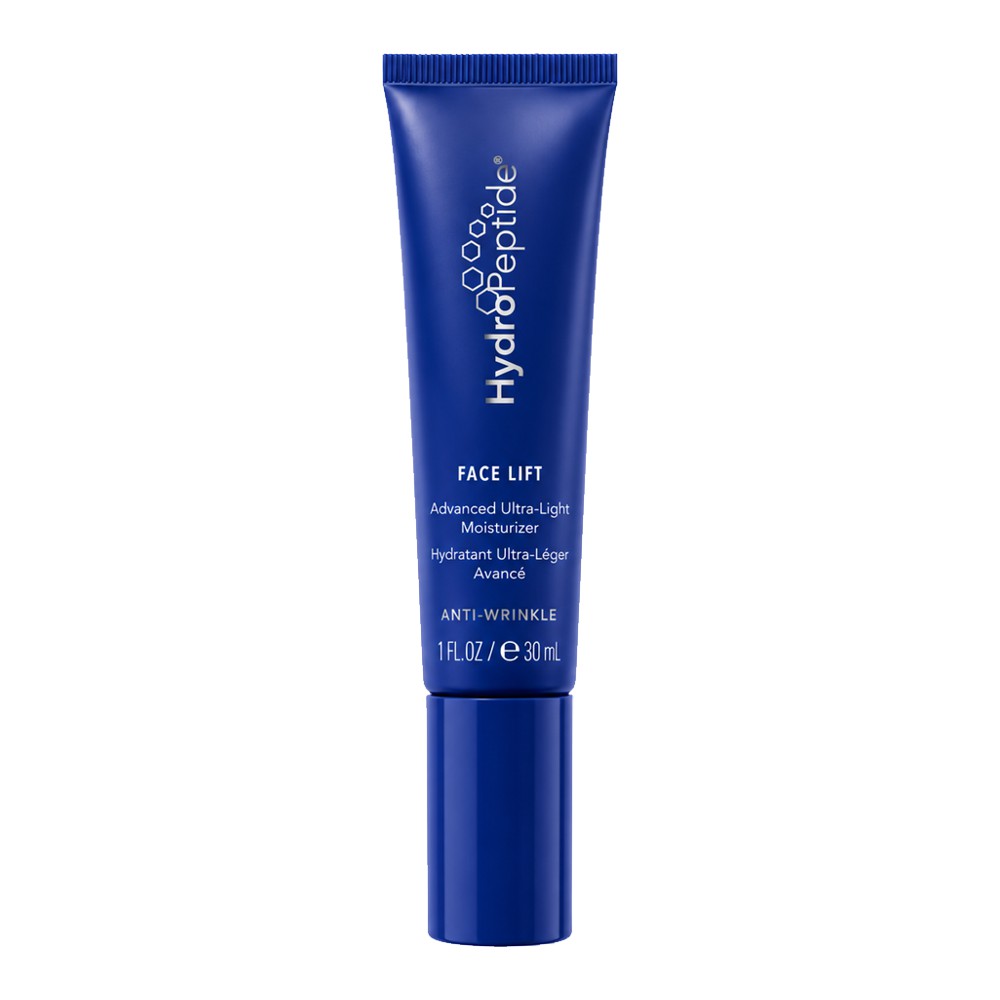
An ultra-light moisturizer pairing a barrier-support lipid complex with an antioxidant-boosting peptide.
Signal, Carrier, and Neurotransmitter-Inhibiting Peptides: A Field Guide breaks down each of these categories individually, with the specific named peptides most commonly used in each.
What the Evidence Actually Supports
Research on topical peptides varies by the specific peptide, not by the category as a whole. Some individual peptide complexes have a solid body of published research behind their use in skincare, showing support for measures like skin elasticity or the visible appearance of fine lines over weeks of consistent use. Other peptides included in formulas have much thinner independent research, even when marketed with similar confidence.
The specific ingredient name matters far more than the category name here. Are Peptides Safe? What the Science (and Regulation) Actually Say breaks down how to evaluate these claims and how peptides are regulated as cosmetic ingredients. The short version: look for products that describe what a peptide supports, using language like “supports the appearance of” or “may help with.” Skip anything promising to fix or reverse a condition outright.
How Peptides Fit Into a Routine
Peptides work through different mechanisms than most other skincare actives, so they combine well with most routines. How they layer with stronger actives like retinoids is a common question, covered directly in Peptides vs. Retinol: Which Should You Use First?. Consistency matters more than most single-use claims suggest: like most actives that work by supporting a biological process, peptides need weeks of regular application, not a single use, to show a visible change.
Formulation, concentration, and delivery all affect how well a peptide product performs, so the label itself carries more useful information than the marketing copy around it. How to Choose a Peptide Serum: What to Look for on the Label covers what specifically to look for.
The Practical Takeaway
Peptides in skincare are not one ingredient with one job. They are a size category that includes several genuinely different functions: supporting collagen, delivering minerals to cells, softening the look of expression lines, and reinforcing the skin barrier. The value of any specific product depends on which of these jobs it is formulated to do, how well it does it, and whether the evidence for that specific peptide backs up the claim on the front of the bottle.
To go deeper into any one category, continue to the copper peptide and signal peptide breakdowns, or return to the pillar guide on peptides What Are Peptides? A Beginner’s Guide to Health and Beauty for the complete topic map.
For a quick lookup of any other named peptide in this series, the Peptide Glossary has the full list in one place.

Related Guides
Ingredient Deep-Dive
Copper Peptides (GHK-Cu) Explained: Benefits and How They Work
Copper peptides show up in serums under a few different names, but GHK-Cu is the one with the longest research history. Here is what it actually does and how it differs from other peptide types.
Continue ReadingWellness Science
Marine vs. Bovine vs. Plant-Based Collagen: How to Choose
Collagen supplements are not all sourced the same way, and the source affects allergies, dietary fit, and even how the product works. Here is how marine, bovine, and plant-based options actually compare.
Continue ReadingWellness Science
Collagen Peptides Explained: Do Oral Supplements Really Work?
Collagen peptide powders promise skin, hair, and joint support, but the path from a scoop of powder to any visible effect is longer than the marketing suggests. Here is what actually happens and what the evidence supports.
Continue ReadingWellness Science
Why Are Peptides Suddenly Everywhere? Understanding the Trend
Peptides didn't become a household word by accident. Several separate trends converged at once, from biotech advances to a completely unrelated medical news cycle. Here is what's actually behind the surge.
Continue ReadingIngredient Deep-Dive
Peptides vs. Retinol: Which Should You Use First?
Peptides and retinol both show up in anti-aging routines, but they are not interchangeable. Here is how the two actually differ, and a practical way to decide where to start.
Continue ReadingWellness Science
Peptides for Hair Growth: What’s Backed by Evidence and What Isn’t
Peptide serums and supplements for hair are a growing category, but the evidence varies widely by product type. Here is what's actually supported, and when hair thinning calls for a doctor rather than a shampoo.
Continue ReadingIngredient Deep-Dive
Signal, Carrier, and Neurotransmitter-Inhibiting Peptides: A Field Guide
Not every peptide in a serum does the same job. This field guide breaks down the main functional categories, what each one is built to do, and which named ingredients fall into each group.
Continue ReadingWellness Science
The Complete Peptide Glossary: Every Ingredient Explained
A single reference for every named peptide covered across our guides, organized by function, with a one-line summary and a link to the full breakdown for each.
Continue ReadingIngredient Deep-Dive
Palmitoyl Pentapeptide-4 Explained: The Original Signal Peptide
Palmitoyl pentapeptide-4 helped popularize the entire signal peptide category in skincare. Here is what makes it different from copper peptides and acetyl hexapeptide-8, and what the research actually shows.
Continue Reading