La Prairie’s Skin Caviar Liquid Lift is a lifting serum built around the brand’s caviar-derived ingredients, alongside a documented complex of named peptides. The formula uses a two-phase activation system: caviar micro-beads arrive separated from the main emulsion and blend together with the first shake and press of the vial.
What’s Actually in the Formula
The named peptides in the ingredient list are Palmitoyl Tripeptide-1 and Palmitoyl Tetrapeptide-7, sometimes marketed together under the branded name Matrixyl 3000, alongside Tetrapeptide-3. These are signal peptides from the same general family covered in our dedicated guide to palmitoyl pentapeptide-4, intended to support the skin’s own collagen-related processes.
Caviar extract and caviar oil are listed directly in the ingredient list; the brand’s marketing names for specific caviar-derived fractions, Caviar Micro-Nutrients, Caviar Premier, and Caviar Absolute, describe how these ingredients are positioned rather than separate items on the INCI list. The formula also includes sodium DNA and RNA, which the brand markets under the term Fragmented Caviar PDRN, along with sodium hyaluronate for hydration and ceramide NP for barrier support.
Why the “Instant Lift” Happens
The visible tightening effect within the first 15 minutes comes primarily from Pullulan, a film-forming ingredient that creates a temporary, taut layer on the skin’s surface. This is a genuine, well-understood cosmetic mechanism, not a claim we’re taking on faith. It’s a short-term, physical effect layered on top of the longer-term support from the formula’s named peptides, which is a separate, slower process discussed below.
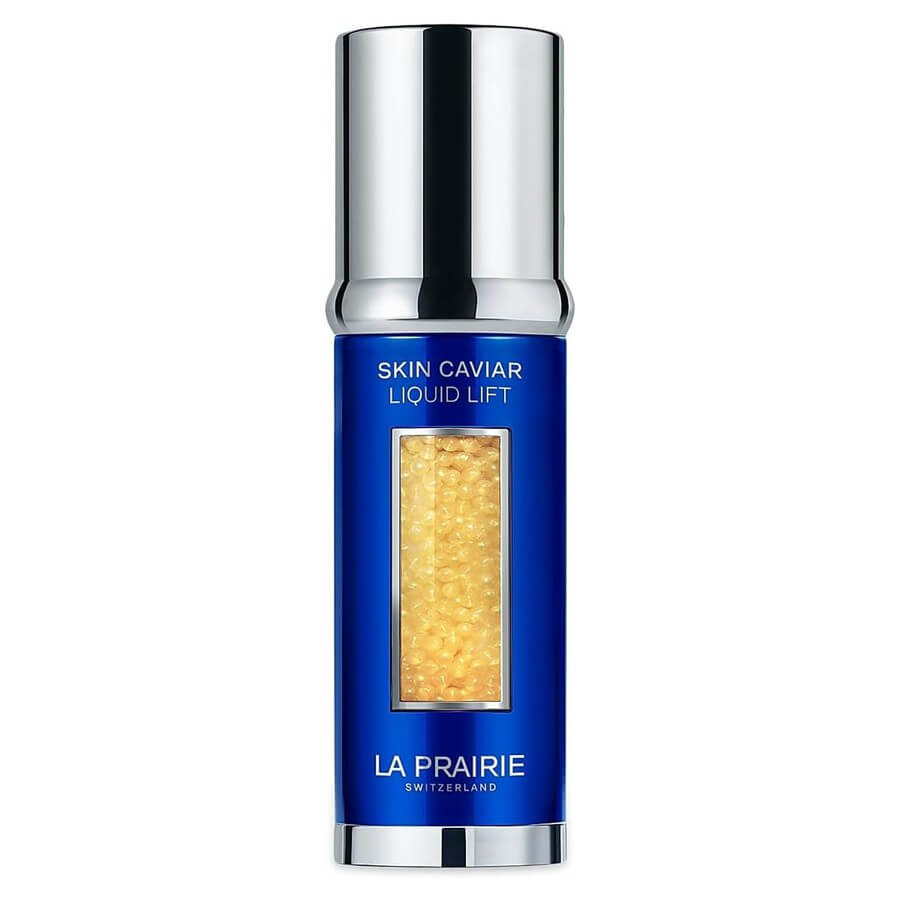
A Swiss lifting serum with named peptides palmitoyl tripeptide-1 and palmitoyl tetrapeptide-7, caviar-derived ingredients, and a temporary film-forming lift from pullulan.
What This Formula Is Intended to Support
With consistent use over several weeks, the formula is intended to support the look of firmer, more contoured-looking skin and softer-looking fine lines, working through the named peptide complex described above. As with any cosmetic peptide product, these are appearance-level claims, not a treatment for any underlying skin condition, and not comparable to a clinical procedure.
A Note on Sensitivity
The formula contains SD Alcohol 40-B and a fairly extensive list of fragrance ingredients. If you have sensitive, eczema-prone, or rosacea-affected skin, this is worth checking on the full ingredient list before buying, or patch testing before regular use, the same precaution we’d suggest for any new active-containing serum.
How It Fits Into a Routine
La Prairie designs this serum to be used before a moisturizer, and it doesn’t require using the rest of the Skin Caviar line to work as intended. For a broader look at what to check before choosing any peptide serum, our guide to how to choose a peptide serum covers what matters beyond the ingredient list alone.

Related Guides
Ingredient Deep-Dive
Peptides in Skincare: What They Actually Do for Your Skin
Peptides are one of the most common actives in modern serums, but the label rarely explains what they actually do once they touch skin. Here is the real function, ingredient by ingredient category.
Continue ReadingIngredient Deep-Dive
Peptides vs. Niacinamide: Can You Use Them Together?
Peptides and niacinamide are one of the easiest active pairings to combine, without the irritation concerns of retinol or the formulation issues of vitamin C. Here is why, and what each ingredient actually contributes.
Continue ReadingWellness Science
Marine vs. Bovine vs. Plant-Based Collagen: How to Choose
Collagen supplements are not all sourced the same way, and the source affects allergies, dietary fit, and even how the product works. Here is how marine, bovine, and plant-based options actually compare.
Continue ReadingWellness Science
The Complete Peptide Glossary: Every Ingredient Explained
A single reference for every named peptide covered across our guides, organized by function, with a one-line summary and a link to the full breakdown for each.
Continue ReadingIngredient Deep-Dive
Palmitoyl Pentapeptide-4 Explained: The Original Signal Peptide
Palmitoyl pentapeptide-4 helped popularize the entire signal peptide category in skincare. Here is what makes it different from copper peptides and acetyl hexapeptide-8, and what the research actually shows.
Continue ReadingIngredient Deep-Dive
Peptides vs. Vitamin C: Which Should You Use First?
Peptides and vitamin C both get marketed for firmer, brighter skin, but they don't always play well together in the same formula. Here is what actually separates them and how to layer them without wasting either one.
Continue ReadingIngredient Deep-Dive
Peptides vs. Retinol: Which Should You Use First?
Peptides and retinol both show up in anti-aging routines, but they are not interchangeable. Here is how the two actually differ, and a practical way to decide where to start.
Continue ReadingWellness Science
How Peptides Work in the Body and Skin, Explained Simply
Peptides are often described as "sending signals" to cells, but what does that actually mean? Here is what happens between applying a serum or taking a supplement and any visible result.
Continue ReadingWellness Science
Collagen Peptides Explained: Do Oral Supplements Really Work?
Collagen peptide powders promise skin, hair, and joint support, but the path from a scoop of powder to any visible effect is longer than the marketing suggests. Here is what actually happens and what the evidence supports.
Continue Reading