An ingredient list that says “peptide complex” tells you almost nothing about what a product does. The functional category the peptide belongs to tells you far more. This guide walks through the main categories used in skincare, what each one does, and how to recognize them on a label.
Why Categorizing by Function Matters More Than Naming
As covered in Peptides in Skincare: What They Actually Do for Your Skin, peptide is a size classification, not a function. Formulators group skincare peptides by the job they do rather than their exact chemical structure, and that functional grouping is the most useful lens for reading a label. Four categories cover most of what you will encounter.
Signal Peptides
Signal peptides mimic small fragments that appear naturally during skin repair. Presenting cells with a fragment they already recognize triggers the skin’s own collagen production, supporting firmness and reducing the look of fine lines with consistent use.
The best-known example is palmitoyl pentapeptide-4, often marketed under a proprietary branded name on ingredient lists or in marketing copy. Formulators frequently pair signal peptides with other actives, since they work through a distinct mechanism from ingredients like retinoids or vitamin C rather than competing with them.
Carrier Peptides
Carrier peptides transport a specific trace mineral, most commonly copper, to skin cells. The mineral does most of the functional work once delivered; the peptide’s job is getting it there. This is a structurally different task from a signal peptide, even though both fall under the broad “peptide” label.
The best-known and most studied example is GHK-Cu, covered in full detail in Copper Peptides (GHK-Cu) Explained: Benefits and How They Work. If you see “copper peptide” or “copper tripeptide” on a label, this is the category it belongs to.
Neurotransmitter-Inhibiting Peptides
This category works differently from the two above. Instead of supporting collagen production or delivering minerals, these peptides interfere with the signal that triggers small muscle contractions in skin, the kind associated with repeated expressions. Reducing that signal softens the visible look of expression lines over time with consistent use.
Acetyl hexapeptide-8, commonly marketed under a well-known branded name, is the most familiar ingredient in this category. Marketing sometimes describes it as working similarly to injectable treatments. That is a mechanism comparison, not an equivalence claim. A topical peptide interfering with surface-level signaling and an injectable treatment sit in different product categories with different regulatory status. Are Peptides Safe? What the Science (and Regulation) Actually Say covers this distinction in full.
Enzyme-Inhibiting Peptides
A fourth, less commonly marketed category interferes with the enzymes that break down existing collagen, rather than stimulating new collagen production. The logic here is preservation, not production: slowing natural breakdown alongside whatever collagen-supporting ingredients are already in a routine. These peptides show up less often on consumer labels than the three categories above, but appear in some higher-end formulations.
How These Categories Work Together
None of these four categories replaces the others, since each targets a different part of the same broader picture: supporting collagen, delivering minerals, softening the look of expression lines, and slowing collagen breakdown. That is why many peptide serums list a blend rather than a single peptide type. A formula combining a signal peptide with a carrier peptide, for example, targets two different mechanisms in the same product, not two doses of the same one.
Whether a specific blend is worth the price comes down to formulation quality, concentration, and how the ingredients are stabilized together, not the number of peptide types listed. How to Choose a Peptide Serum: What to Look for on the Label covers what to actually check.
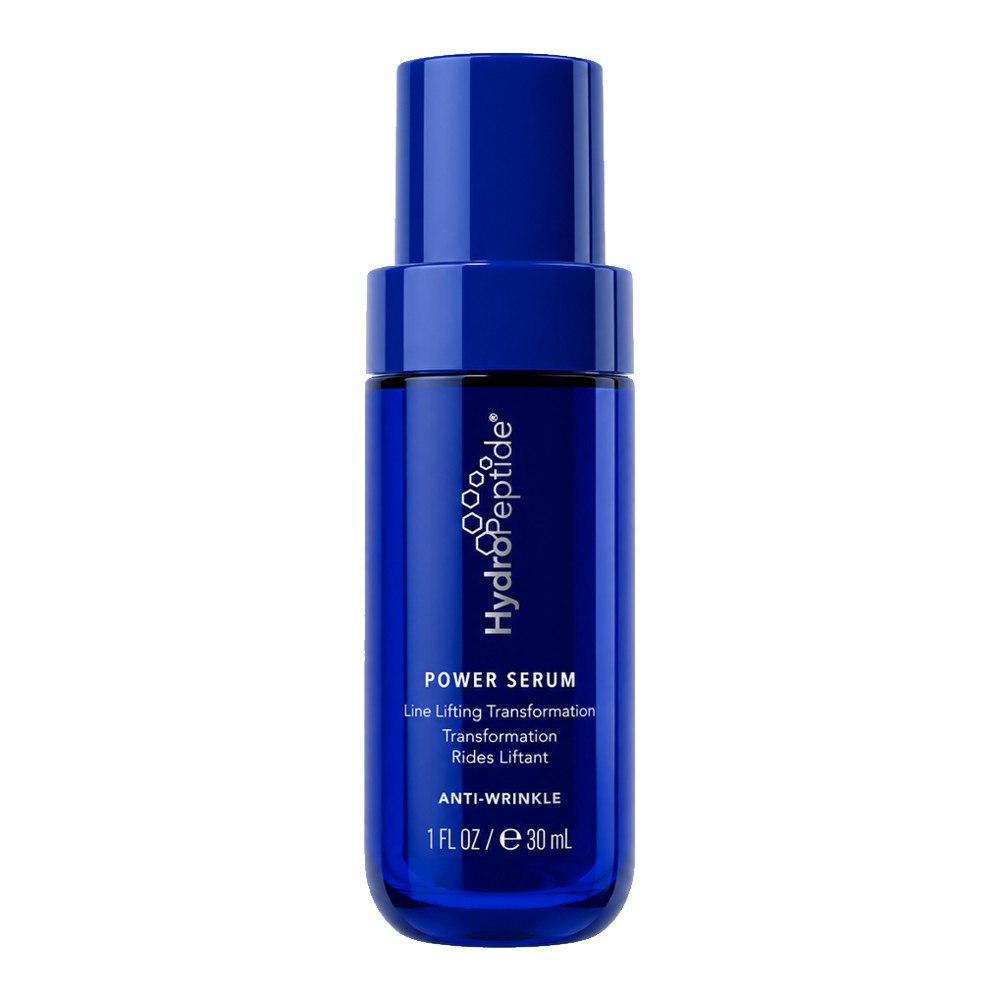
A multi-peptide serum combining signal and neurotransmitter-inhibiting peptides to support the look of firmer, smoother skin.
A Quick Reference
Signal peptides: support collagen production, most associated with firmness and fine lines. Look for palmitoyl pentapeptide-4 or similar palmitoyl-prefixed names.
Carrier peptides: deliver trace minerals, most commonly copper, to support cell maintenance. Look for copper tripeptide-1 or GHK-Cu.
Neurotransmitter-inhibiting peptides: soften the look of expression lines by interfering with muscle contraction signals. Look for acetyl hexapeptide-8.
Enzyme-inhibiting peptides: slow the breakdown of existing collagen. Less common on consumer labels, more likely in higher-end or clinical-adjacent formulations.
The Practical Takeaway
Next time you check a serum label, look past the word “peptide” and identify which functional category the named ingredient actually belongs to. A product built around a well-chosen combination of these categories, at an effective concentration, is a fundamentally different thing from a product that lists “peptides” as a vague, unnamed ingredient.
For a direct comparison of how peptides stack up against retinol in a routine, continue to Peptides vs. Retinol: Which Should You Use First?, or return to Peptides in Skincare: What They Actually Do for Your Skin for the full category overview.
For a quick lookup of any other named peptide in this series, the Peptide Glossary has the full list in one place.

Related Guides
Wellness Science
Collagen Peptides Explained: Do Oral Supplements Really Work?
Collagen peptide powders promise skin, hair, and joint support, but the path from a scoop of powder to any visible effect is longer than the marketing suggests. Here is what actually happens and what the evidence supports.
Continue ReadingWellness Science
Peptides vs. Proteins vs. Amino Acids: What’s the Difference?
These three words get used as if they mean the same thing. They don't. Here is the actual relationship between amino acids, peptides, and proteins, and why the size difference matters for how each one works.
Continue ReadingWellness Science
Peptides for Joint and Cartilage Health: What Collagen Supplements Can (and Can’t) Do
Collagen peptides are commonly marketed for joint comfort, but the research and the marketing don't always line up. Here is what the evidence supports, and when joint pain needs more than a supplement.
Continue ReadingWellness Science
How Peptides Work in the Body and Skin, Explained Simply
Peptides are often described as "sending signals" to cells, but what does that actually mean? Here is what happens between applying a serum or taking a supplement and any visible result.
Continue ReadingWellness Science
The Complete Peptide Glossary: Every Ingredient Explained
A single reference for every named peptide covered across our guides, organized by function, with a one-line summary and a link to the full breakdown for each.
Continue ReadingIngredient Deep-Dive
Peptides vs. Niacinamide: Can You Use Them Together?
Peptides and niacinamide are one of the easiest active pairings to combine, without the irritation concerns of retinol or the formulation issues of vitamin C. Here is why, and what each ingredient actually contributes.
Continue ReadingWellness Science
Peptides and Longevity: Separating Hype from Evidence
Longevity culture talks about peptides constantly, often blending well-supported skincare research with much bigger, far less settled claims about aging itself. Here is how to tell which is which.
Continue ReadingIngredient Deep-Dive
Peptides vs. Retinol: Which Should You Use First?
Peptides and retinol both show up in anti-aging routines, but they are not interchangeable. Here is how the two actually differ, and a practical way to decide where to start.
Continue ReadingWellness Science
Marine vs. Bovine vs. Plant-Based Collagen: How to Choose
Collagen supplements are not all sourced the same way, and the source affects allergies, dietary fit, and even how the product works. Here is how marine, bovine, and plant-based options actually compare.
Continue Reading