You have seen the word on serum labels, supplement bottles, and in your feed. Peptides are having a moment. But most explanations either oversimplify them into a vague buzzword or bury you in biochemistry you did not ask for.
This guide sits in the middle. It explains what peptides are, where they show up in skincare and supplements, and what the evidence actually supports. No dosing advice. No miracle claims. Just a clear starting point, with links to deeper guides on each topic as you need them.
Peptides, in One Sentence
A peptide is a short chain of amino acids linked together. Amino acids are the building blocks of protein. When a small number of them link up, usually somewhere between two and fifty, the result is a peptide. Link many more together, and you get a full protein.
That size difference matters. A peptide is small enough to be recognized by cells and to trigger specific reactions, but simple enough that scientists can design and manufacture exact sequences for a specific purpose. This is why peptides show up everywhere from skincare labs to supplement shelves to medical research: the same basic building block can be tuned for very different jobs.
For the deeper breakdown of how peptides differ from proteins and amino acids, see Peptides vs. Proteins vs. Amino Acids: What’s the Difference?
How Peptides Actually Work
Your body already runs on peptides. Insulin is a peptide hormone. Collagen, the protein that gives skin its structure, breaks down into peptide fragments as part of its natural cycle. Your cells constantly send and receive peptide signals to coordinate basic functions like repair and inflammation response.
Skincare and supplement companies did not invent this system. They found ways to work with it. A topical product with a signal peptide, for example, hands cells a fragment they already know how to read, prompting the same response as real skin repair, including a boost in collagen production. An oral collagen peptide supplement works differently: it delivers pre-broken-down collagen fragments that are easier for your digestive system to absorb than whole collagen protein.
The mechanism is specific. The results are not universal. How well a peptide works depends on the exact sequence, the concentration, whether it can actually reach where it needs to go, and how your own body responds. How Peptides Work in the Body and Skin, Explained Simply goes into this in more detail.
Where You Will Actually Encounter Peptides
For a beginner, it helps to know that peptides fall into two very different consumer categories. Confusing the two is where most of the internet’s peptide hype and confusion comes from.
Topical peptides in skincare. These are ingredients in serums, moisturizers, and eye creams, applied directly to skin. This is a well-established, mainstream cosmetics category with decades of formulation history. Copper peptides, signal peptides, and carrier peptides all fall here. Peptides in Skincare: What They Actually Do for Your Skin breaks down exactly what these do, with more depth in Copper Peptides (GHK-Cu) Explained: Benefits and How They Work and Signal, Carrier, and Neurotransmitter-Inhibiting Peptides: A Field Guide.
One example combining a signal peptide with a newer, biotech-engineered peptide fragment is Doctor Babor’s Derma Filler Serum:
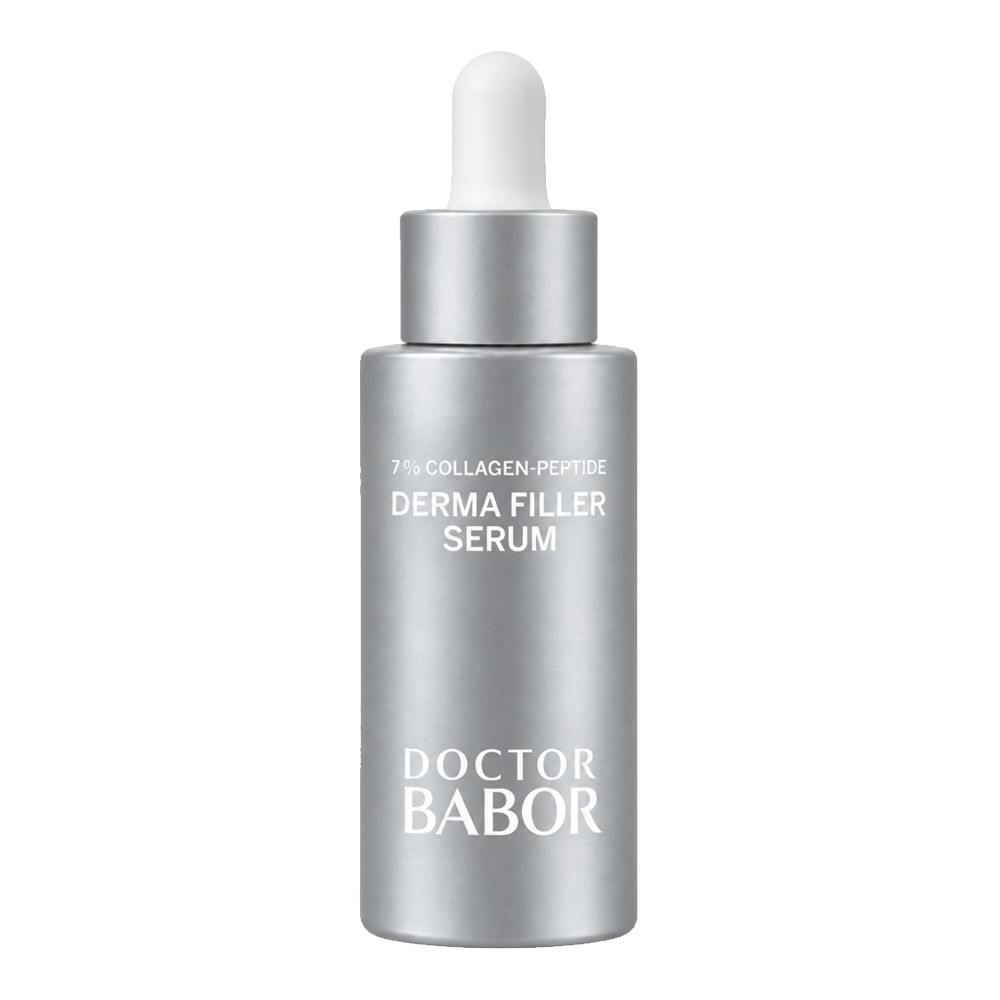
A German-formulated serum combining a signal peptide with a biotech-engineered plant-based collagen peptide fragment.
Oral peptide supplements. These are ingested, most commonly as collagen peptides for skin, hair, and joint support. This is a standard category of dietary supplement, sold in powders and capsules, distinct from prescription or clinical use. Collagen Peptides Explained covers how this category works and what current research actually supports.
A note on what this site does not cover, and why: peptides used by injection for research or performance purposes sit in a completely different regulatory and safety category, treated in most jurisdictions as unlicensed medicine when used outside a licensed clinical setting. That territory carries real legal and health risk and falls outside what a skincare and wellness content resource should be advising on. Everything on this site stays within topical skincare and standard oral supplements, the categories with an established safety and regulatory track record for consumer use.
So, Do Peptides Actually Work?
This is the honest answer: it depends entirely on which peptide, in which form, at what concentration, and what you are hoping it will do.
Some claims have solid research behind them. Others are marketing running ahead of the evidence. The responsible way to evaluate any peptide product is to look at the specific ingredient, not the word “peptide” as a whole. A serum with a well-studied copper peptide complex and a serum that just prints “with peptides” on the front are not making the same claim, even if they use the same word.
Are Peptides Safe? What the Science (and Regulation) Actually Say is a full guide dedicated to this question. It covers safety data, how regulators in the US and UK actually classify peptide products, and how to read a label without falling for hype.
Why Peptides Are Suddenly Everywhere
If you feel like the word “peptide” appeared out of nowhere in the last couple of years, you are not imagining it. Search interest, product launches, and social media mentions have all climbed sharply. Some of that growth tracks real scientific progress. Some of it tracks the same cycle every trending ingredient goes through, where enthusiasm outpaces evidence for a while before things settle into a more accurate picture.
Why Are Peptides Suddenly Everywhere? Understanding the Trend looks at why this happened and what is genuinely new versus recycled marketing. For the longevity and anti-aging angle specifically, see Peptides and Longevity: Separating Hype from Evidence.
Where to Go From Here
This page is meant to be a starting point, not the full picture. Depending on what brought you here, these are the most useful next steps:
If you are curious about skincare specifically, start with Peptides in Skincare: What They Actually Do for Your Skin, then compare approaches in Peptides vs. Retinol: Which Should You Use First?
If you are looking at buying a peptide serum, How to Choose a Peptide Serum: What to Look for on the Label walks through what actually matters on an ingredient list.
If you are interested in supplements rather than skincare, Collagen Peptides Explained: Do Oral Supplements Really Work? and Marine vs. Bovine vs. Plant-Based Collagen: How to Choose are the right next reads, along with our specific looks at Peptides for Hair Growth: What’s Backed by Evidence and What Isn’t and Peptides for Joint and Cartilage Health: What Collagen Supplements Can (and Can’t) Do.
If you want the safety and regulatory picture before anything else, go straight to Are Peptides Safe? What the Science (and Regulation) Actually Say.
Every guide in this series stays within the same boundaries: plain language, evidence over hype, and a clear line between what peptides can support and what they cannot promise.
For a quick lookup of any other named peptide in this series, the Peptide Glossary has the full list in one place.

Related Guides
Wellness Science
How Peptides Work in the Body and Skin, Explained Simply
Peptides are often described as "sending signals" to cells, but what does that actually mean? Here is what happens between applying a serum or taking a supplement and any visible result.
Continue ReadingWellness Science
Peptides for Hair Growth: What’s Backed by Evidence and What Isn’t
Peptide serums and supplements for hair are a growing category, but the evidence varies widely by product type. Here is what's actually supported, and when hair thinning calls for a doctor rather than a shampoo.
Continue ReadingWellness Science
Are Peptides Safe? What the Science (and Regulation) Actually Say
Peptides sit in three very different regulatory categories: cosmetics, supplements, and medicine. Here is what that split actually means for safety, and how to tell which category a product falls into.
Continue ReadingWellness Science
Why Are Peptides Suddenly Everywhere? Understanding the Trend
Peptides didn't become a household word by accident. Several separate trends converged at once, from biotech advances to a completely unrelated medical news cycle. Here is what's actually behind the surge.
Continue ReadingIngredient Deep-Dive
Acetyl Hexapeptide-8 Explained: How This Peptide Softens Expression Lines
Acetyl hexapeptide-8 is the ingredient behind some of the best-known "instant" wrinkle serums, often marketed alongside comparisons to injectable treatments. Here is what it actually does, and where that comparison breaks down.
Continue ReadingIngredient Deep-Dive
Signal, Carrier, and Neurotransmitter-Inhibiting Peptides: A Field Guide
Not every peptide in a serum does the same job. This field guide breaks down the main functional categories, what each one is built to do, and which named ingredients fall into each group.
Continue ReadingWellness Science
What Are Peptides? A Beginner’s Guide to Health and Beauty
Peptides are everywhere, from serum labels to supplement bottles to your feed. This guide explains what they actually are, how they work in skincare and supplements, and what the evidence supports, without the hype.
Continue ReadingWellness Science
Peptides vs. Proteins vs. Amino Acids: What’s the Difference?
These three words get used as if they mean the same thing. They don't. Here is the actual relationship between amino acids, peptides, and proteins, and why the size difference matters for how each one works.
Continue ReadingWellness Science
Collagen Peptides Explained: Do Oral Supplements Really Work?
Collagen peptide powders promise skin, hair, and joint support, but the path from a scoop of powder to any visible effect is longer than the marketing suggests. Here is what actually happens and what the evidence supports.
Continue Reading