La Prairie’s Platinum Rare Haute-Rejuvenation Protocol is a 30-day intensive treatment, designed for use four times a year rather than as a daily product. Three sealed vials cover one 30-day cycle; the brand recommends a roughly 90-day pause between cycles.
What’s Actually in the Formula
The formula is built around a documented peptide complex, not a vague “multi-peptide blend.” The named peptides in the ingredient list include Palmitoyl Pentapeptide-4, a signal peptide covered in our dedicated guide, alongside Oligopeptide-6, Decapeptide-4, and Palmitoyl Tetrapeptide-10. The formula also includes two bioengineered, plant-expressed peptides, Nicotiana Benthamiana Octapeptide-30 SH-Oligopeptide-2 and Nicotiana Benthamiana Hexapeptide-40 SH-Oligopeptide-1, from the same general category of lab-produced peptide technology covered in our guide to Doctor Babor’s Derma Filler Serum.
Colloidal platinum and La Prairie’s Exclusive Cellular Complex™, a proprietary blend that includes ginseng root extract, horsetail extract, and fermented yeast extract, are separate ingredients in the same formula, not chemically bonded to the peptides, despite how some marketing describes the product.
How the Vial System Works
Three sealed vials arrive in an activation case. Each vial combines a concentrated phase with a clear phase; twisting and shaking the vial merges the two just before first use, which is a formulation approach used to keep certain actives stable until application rather than sitting pre-mixed on a shelf.
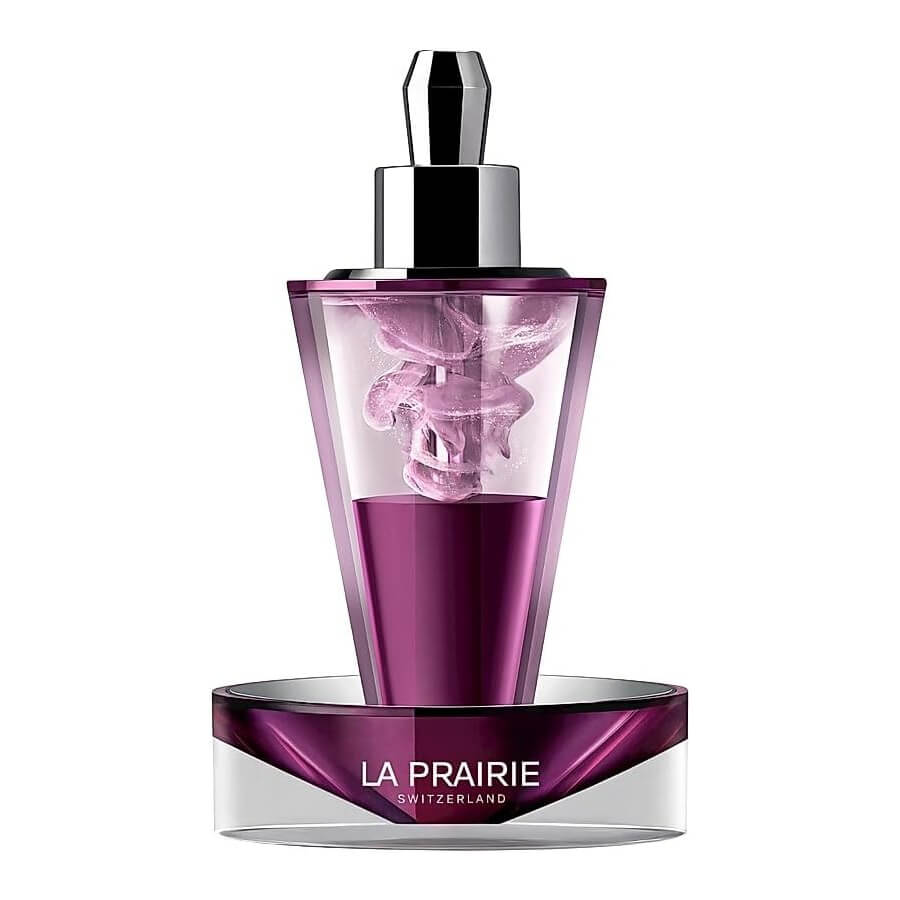
Formulated in Switzerland, this 30-day quarterly treatment is built around a documented complex of named peptides, including palmitoyl pentapeptide-4, alongside colloidal platinum and hyaluronic acid.
What This Formula Is Intended to Support
As with any cosmetic peptide product, the claims here are limited to supporting skin’s appearance, not treating or reversing any underlying skin condition. With consistent use across a 30-day cycle, the formula is intended to support the look of firmer, smoother-looking skin and a more even tone, working alongside the humectant and hydrating ingredients also present in the formula, including sodium hyaluronate.
Why the Treatment Follows a Cycle Rather Than Daily Use
La Prairie markets this specifically as a quarterly reset rather than a daily-use product, framing the 30-day active period and the roughly 90-day pause as a deliberate rhythm rather than a strict requirement. There’s no independent research we’re aware of that establishes this exact cycle length as uniquely superior to continuous use; it’s the usage pattern the brand has built the product and its vial-based packaging around.
Swiss Formulation
The product is formulated and manufactured in Switzerland, consistent with La Prairie’s broader positioning around Swiss cosmetic science, covered generally in our about page.
Who This Product Is For
This is a higher-intensity, higher-cost product positioned for people already using a consistent skincare routine who want a periodic, more concentrated treatment layered on top of daily care, rather than a starting point for someone new to peptide skincare. For a lower-commitment entry into named-peptide skincare, our guide to choosing a peptide serum covers what to look for at any price point.

Related Guides
Wellness Science
How Peptides Work in the Body and Skin, Explained Simply
Peptides are often described as "sending signals" to cells, but what does that actually mean? Here is what happens between applying a serum or taking a supplement and any visible result.
Continue ReadingIngredient Deep-Dive
Peptides vs. Retinol: Which Should You Use First?
Peptides and retinol both show up in anti-aging routines, but they are not interchangeable. Here is how the two actually differ, and a practical way to decide where to start.
Continue ReadingIngredient Deep-Dive
Peptides vs. Niacinamide: Can You Use Them Together?
Peptides and niacinamide are one of the easiest active pairings to combine, without the irritation concerns of retinol or the formulation issues of vitamin C. Here is why, and what each ingredient actually contributes.
Continue ReadingIngredient Deep-Dive
Palmitoyl Pentapeptide-4 Explained: The Original Signal Peptide
Palmitoyl pentapeptide-4 helped popularize the entire signal peptide category in skincare. Here is what makes it different from copper peptides and acetyl hexapeptide-8, and what the research actually shows.
Continue ReadingWellness Science
Peptides and Longevity: Separating Hype from Evidence
Longevity culture talks about peptides constantly, often blending well-supported skincare research with much bigger, far less settled claims about aging itself. Here is how to tell which is which.
Continue ReadingIngredient Deep-Dive
Copper Peptides (GHK-Cu) Explained: Benefits and How They Work
Copper peptides show up in serums under a few different names, but GHK-Cu is the one with the longest research history. Here is what it actually does and how it differs from other peptide types.
Continue ReadingIngredient Deep-Dive
Acetyl Hexapeptide-8 Explained: How This Peptide Softens Expression Lines
Acetyl hexapeptide-8 is the ingredient behind some of the best-known "instant" wrinkle serums, often marketed alongside comparisons to injectable treatments. Here is what it actually does, and where that comparison breaks down.
Continue ReadingIngredient Deep-Dive
Signal, Carrier, and Neurotransmitter-Inhibiting Peptides: A Field Guide
Not every peptide in a serum does the same job. This field guide breaks down the main functional categories, what each one is built to do, and which named ingredients fall into each group.
Continue ReadingWellness Science
Collagen Peptides Explained: Do Oral Supplements Really Work?
Collagen peptide powders promise skin, hair, and joint support, but the path from a scoop of powder to any visible effect is longer than the marketing suggests. Here is what actually happens and what the evidence supports.
Continue Reading